
Your weight went up two pounds overnight. You did not gain two pounds of fat.
What the number on the scale is made of, and how to read it without it ruining your morning.
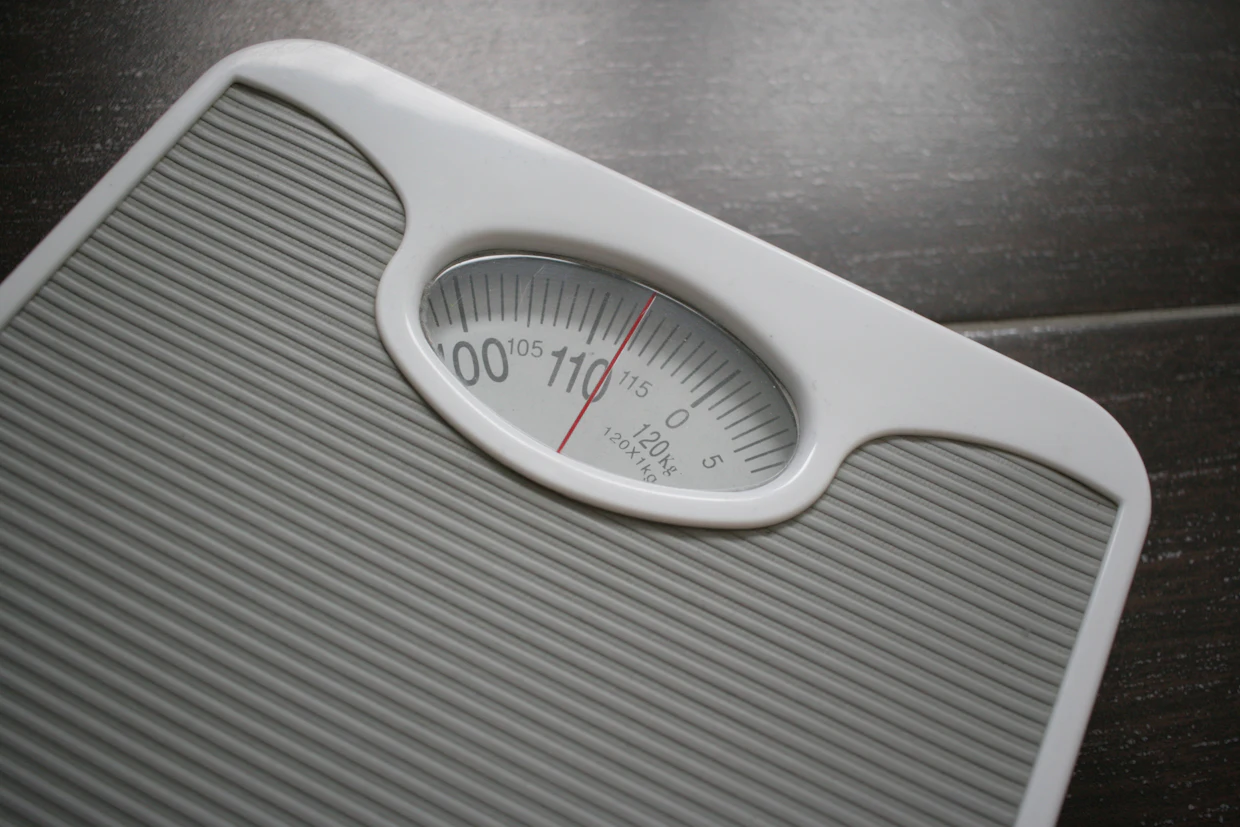
You did everything the same. You get on the scale and it is up two pounds from yesterday.
Two pounds of body fat is roughly seven thousand calories. You did not eat seven thousand extra calories yesterday, and your body did not build that overnight. What changed is almost entirely water, and water moves for reasons that have nothing to do with how your week went.
What the number is made of
The scale weighs everything you are carrying at that moment. Fat is one part of it, and it is the slowest part to change. The rest moves daily.
- Salt. A saltier day than usual pulls water into your tissues, and you can hold a pound or two of it for a day or so. This is why takeout on Saturday shows up on Sunday.
- Carbohydrate. Your body stores carbohydrate as glycogen, and each gram of it holds a few grams of water alongside. Eat more carbohydrate than usual and the scale rises without any fat arriving. Eat much less and it drops fast in the first week, which is why low carbohydrate starts look dramatic and then slow down.
- What is still in transit. Food and fluid in your digestive system have weight until they leave. Constipation alone can account for a couple of pounds.
- Hormonal cycles. Many people hold noticeable water in the week before a period.
- Hard exercise or a new activity. Muscles hold extra water while they repair. Starting to move more can nudge the scale up in the short term while everything else is going the right way.
- Medication. Some medications, including certain blood pressure and diabetes drugs and steroids, change how much fluid you hold. That is worth knowing about rather than being confused by.
None of that is failure. It is a body doing normal things with water.

A single weight is a data point. A month of weights is information.
How to weigh yourself so the number is usable
If you weigh at random times, in different clothes, after different days, you get noise and then you react to the noise. A few dull rules make the number mean something.
- Same time of day. First thing in the morning, after the bathroom, before eating or drinking.
- Same amount of clothing, or none.
- Same scale, on a hard floor. Carpet reads unreliably.
- Once or twice a week is plenty for most people. Daily is fine if you can treat it as a stream of numbers rather than a verdict. If daily weighing sends your morning sideways, weigh weekly instead. That is a legitimate choice, not avoidance.
- Look at the line, not the dot. Compare this week’s average to the average three or four weeks ago.
Your connected scale does the last part for you. Step on it, the reading lands in the app, and what you and your care team see is the trend rather than one morning that happened to follow a salty supper.
The number is not the only outcome, and often not the best one
Weight is easy to measure, which is why it gets treated as the score. It is a poor single measure of whether things are going well.
Waist size tracks metabolic risk more closely than weight does, and it moves when weight does not. Blood pressure often improves early. Blood sugar frequently improves before much weight has changed at all, particularly with more movement and better sleep. Medication doses sometimes come down. Stairs get easier. Shoes go on without a struggle.
We watch weight because it is one useful signal among several. If your weight is flat for a month while your morning readings, your blood pressure and your energy have all improved, that month worked. A scale cannot tell you that. Your care team can.
When a change in weight is worth a message, not a shrug
Most day to day movement is water and needs nothing from anyone. A few patterns deserve a prompt conversation.
- Fast gain, several pounds within a few days, especially with swelling in the ankles or legs, shortness of breath, or breathlessness lying down. This can be fluid retention that needs attention rather than a diet question.
- Weight falling without your trying, particularly with thirst, urinating often, or unusual tiredness.
- A steady climb over a few weeks that does not match what you are eating, especially after a medication change.
- Weighing has become something you dread, or the number sets the tone of your whole day. That is worth saying out loud. There is a version of this program that does not put a scale at the centre of it, and if daily weighing is doing you harm, we would rather know and change it.
None of these are emergencies to sit on quietly. They are all short conversations.
One small place to start
Pick a weekday morning. Weigh yourself then, the same way, once a week, for four weeks. Write the four numbers in one place, or let the connected scale do it.
At the end of the month, compare the first number to the last, and ignore everything in between. That single comparison is worth more than twenty-eight anxious mornings.
If you are a 360Care member and the scale has been running your mood, tell your care team in the app. We can change what we track with you, and we can tell you what your last month actually showed, which is usually more encouraging than the number you saw this morning.