
Three places, three blood pressures, one you
The pharmacy machine says one thing, the clinic says another, and your own cuff says something else again. None of them is lying, and one of them counts for more than the others.
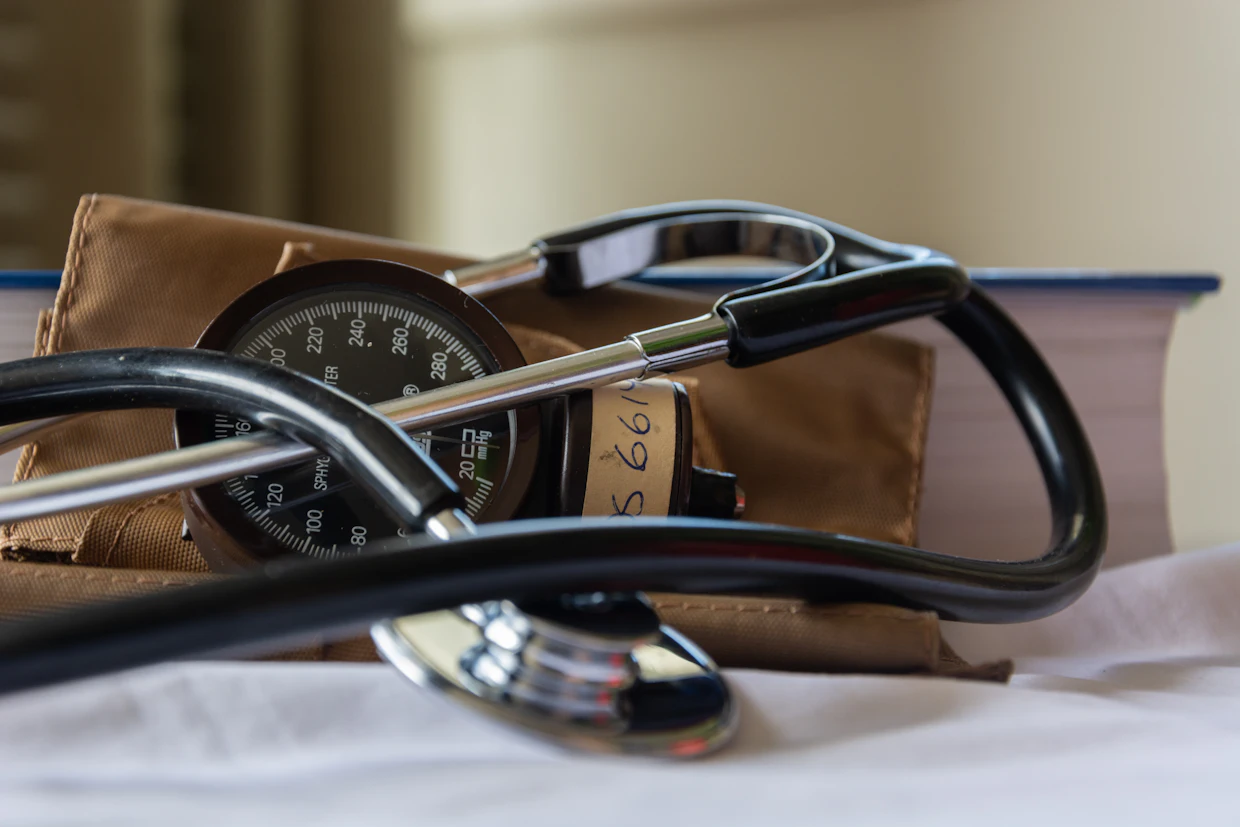
The machine at the back of the pharmacy gives you a number that makes you sit still for a second and read it again.
At home that evening, on your own cuff, you get something noticeably lower. Two weeks later the nurse at the clinic gets something higher than both, and asks whether you have been taking your medication.
You have. All three machines are working. This is a normal thing that happens to almost everyone who measures their blood pressure in more than one place, and it is worth understanding, because which number gets believed changes what happens next.
They are not measuring the same thing
Blood pressure is not a fixed property of a person, like height. It is a thing your body is doing right now, and it moves all day: with the hour, with standing up, with a full bladder, with the stairs you just climbed, with whether someone is watching.
So a single reading is a photograph, not a portrait, and three readings in three settings are three photographs of a moving subject. What your care team is after is the average, in the conditions that make up most of your life. That is why a handful of readings from your own kitchen, taken properly over several days, carries more weight than one impressive number from anywhere else.
White coat, and the one nobody mentions
The familiar pattern has a name. White coat hypertension is when the reading rises in a clinical setting and sits normally elsewhere. It is not nerves in the sense of being a worrier, and it is not something to apologise for. It is a physiological response to the setting, common enough that Hypertension Canada builds its guidance around expecting it.
The pattern nobody mentions runs the other way. Masked hypertension is when the clinic reading looks fine and the readings out in your ordinary life are high. It matters more, because the reassuring number is the one you get told, and the untreated pressure is the one doing the damage. It turns up more often in people who work shifts, who are under sustained stress, who drink more alcohol, or who smoke, and it is a real reason to keep taking readings at home even when your clinic visits keep going well.
The reassuring number is the one you get told. That is exactly what makes the other pattern worth catching.

The pharmacy machine is its own case
The kiosk by the pharmacy counter is convenient, free and genuinely useful for noticing that something has changed. It is not the thing to base a decision on, for reasons that have nothing to do with the quality of the device.
Its cuff is one size, built into a rigid sleeve, and it fits some arms far better than others. A cuff that is too small for your arm reads high, sometimes substantially. You have usually just walked in from outside, you have not sat quietly for five minutes, your feet are often not flat, and your arm is wherever the machine puts it rather than at heart height.
Every one of those pushes in the same direction. Use it as a prompt to check properly at home, or to book an appointment, not as a verdict.
Most of the gap is technique, not biology
The rest of the disagreement is usually mechanical, and the same handful of things cause it every time: cuff size, arm unsupported or below heart height, back not supported, legs crossed, talking during the measurement, a full bladder, coffee or a cigarette in the half hour before, and taking only one reading instead of letting the first one go.
That is why we have a separate article on setting up a home reading properly. Run through that list before you conclude anything. It is also worth taking your own monitor to an appointment once and checking it against the clinic’s on the same arm, minutes apart.

Which number your team actually uses
Home readings are not a hobby your care team humours. In Canada, readings taken outside the clinic are central to how high blood pressure is diagnosed and followed, and Hypertension Canada’s guidance treats a properly taken series of home readings as more informative than office readings alone.
One consequence surprises people: the thresholds are not the same for the two settings. The number that counts as elevated on a home monitor is lower than the number that counts as elevated in a clinic, precisely because the clinic setting is expected to nudge it up. So comparing your kitchen reading against a figure you remember from a poster in a waiting room will mislead you.
You will not find those thresholds printed here, on purpose, for the same reason our home monitoring article leaves them out. Your target is yours, it depends on your age, your other conditions and what you are being treated for, and your care team can tell you what it is in plain words. Ask them, and write it on the notebook beside your monitor.
If the disagreement will not resolve, there is a tiebreaker. A 24 hour ambulatory monitor, worn through an ordinary day and night, takes readings on a schedule while you get on with things. It is the closest thing to a settled answer, and it is what gets arranged when white coat or masked hypertension needs ruling in or out.
Worth a word with your care team
Bring the disagreement itself. Say the pharmacy machine reads this, my monitor reads that, the clinic reads the other, and bring a week of home readings rather than a single number.
Ask specifically about a 24 hour monitor if your clinic and home numbers keep pointing different ways, and mention it if you work nights, because a daytime clinic reading is a poor guide to a body on a night schedule.
Do not skip, stop or change a blood pressure medication because of a reading from any of these machines. That is always a conversation with the person who prescribed it.
One thing to know calmly and then set aside. A very high reading together with symptoms is not a measurement problem. Chest pain or pressure, trouble breathing, sudden weakness or numbness, trouble speaking, sudden vision change, or a severe headache arriving out of nowhere alongside a high reading means calling 911. Call first, measure afterwards.
One small place to start
For the next seven days, take your readings at home at the same two times of day, sitting properly, and write down all of them including the ones you do not like.
Then take the whole week to your next appointment instead of the worst number from the pharmacy. If you are a 360Care member, message your nurse in the app with the week and with what the machine at the pharmacy said, and we will work out together which one is telling you something.