
How to take your BP at home and actually get a useful number
Cuff position, timing and the three readings that matter.
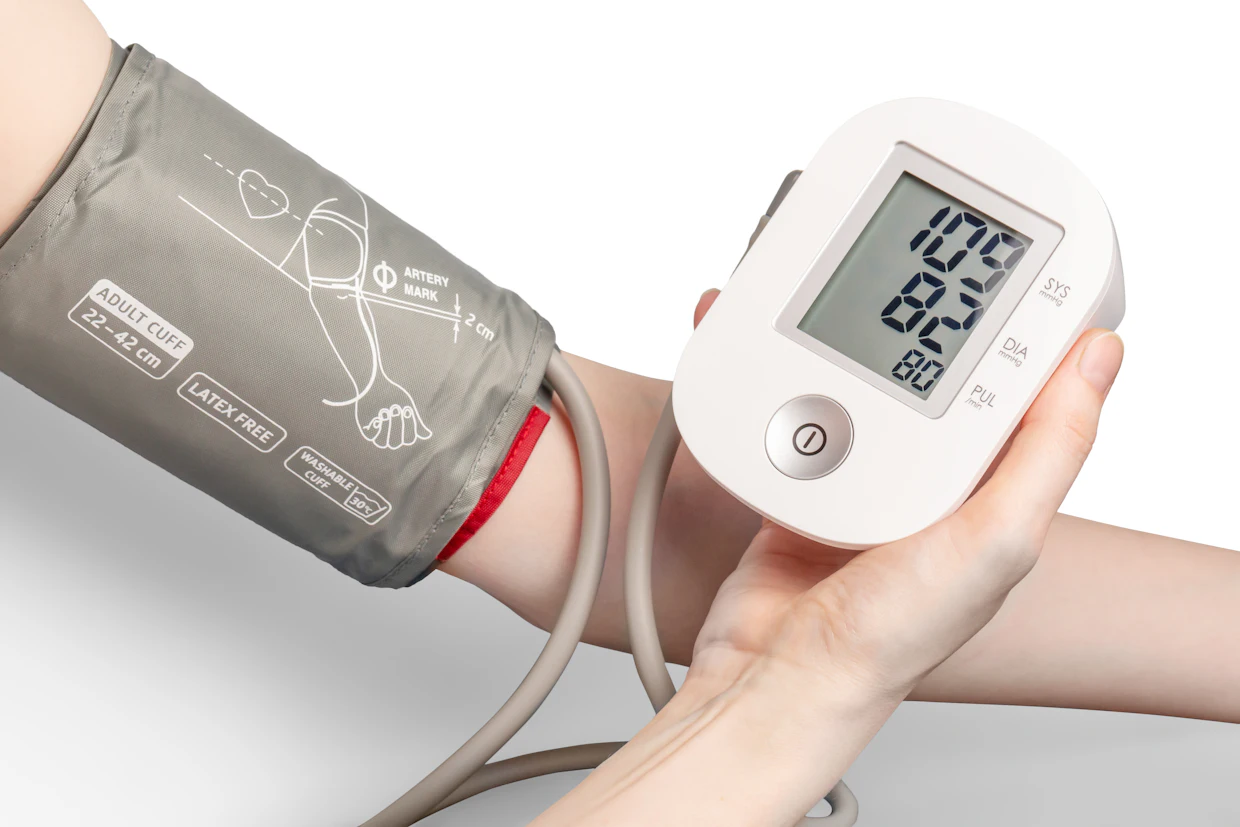
The question I hear most often about home monitors is some version of this: why is my number at home so different from the one at the clinic?
It is a fair question with a real answer. A blood pressure reading is a snapshot of one moment, and it moves through the day. It goes up when you rush, when you talk, when you sit a certain way, when you have climbed the stairs to the waiting room. Two readings twenty minutes apart can look like they came from two different people.
Home monitors are also fussy about technique. Where your arm sits, whether your back is supported, whether the cuff is over a sleeve: small things like these change the number quite a lot. That is about how the device works, not about anything you have done.
Why the clinic number and the home number disagree
For many people living with high blood pressure, the clinic reading runs higher than the one at their kitchen table. Getting to an appointment involves traffic, parking, stairs, a waiting room and a stranger putting a cuff on your arm. Your body responds to all of that.
For other people it goes the other way, and the home number is the higher one. Both patterns are known, and neither means a monitor is broken.
This is why care teams like home readings. A clinic number is one moment. A handful of numbers from your own home shows the pattern, and the pattern is the useful part.
Set up before you take a reading
A few minutes of setup does more for the number than anything else.
- Empty your bladder first, since a full one nudges the reading up
- Leave a half hour after coffee, smoking or exercise before you measure
- Sit in a chair with a back, not on a stool, sofa arm or bed edge
- Put both feet flat on the floor, legs uncrossed
- Rest your arm on a table so the cuff sits at about the height of your heart
- Put the cuff on bare skin, not over a sleeve, and not with a sleeve rolled up tight above it
- Sit quietly for about five minutes before you press start
- Do not talk, scroll or watch anything during the reading
None of that is fussy for its own sake. An arm hanging at your side, or feet dangling instead of flat, can move the number enough to change what your care team sees.
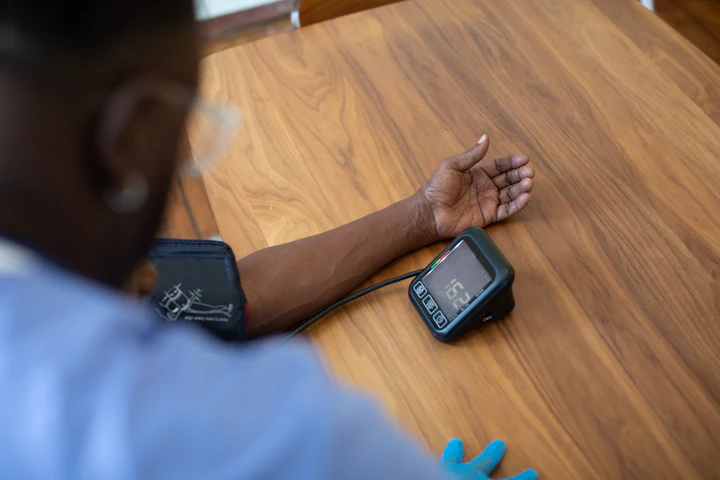
Cuff size matters more than people expect
The cuff has to match your arm. One that is too small tends to read high, and one that is too large tends to read low. That is a mismatch of equipment, nothing more.
Most cuffs have lines printed inside marking where the end belongs when wrapped. If the end falls outside them, a different size is available. The bottom edge sits about two finger widths above the crease of your elbow, snug enough to slide a fingertip underneath but no more.
If you are not sure yours fits, hold it up on a video call with your nurse. It takes a minute to check.
The three readings that matter
Here is the part most people are never told, and it explains a lot of confusing numbers.
Take three readings in one sitting, about a minute apart. Then set the first one aside and average the last two.
The first reading is often the highest of the three, and that is normal. Your body is still settling: you moved to sit down, you wrapped the cuff, the cuff squeezed your arm for the first time. The second and third sit closer to your everyday level, and averaging them smooths out the wobble any single reading carries.
So a first number higher than your target is not a warning on its own. It is what the first reading usually does.
The first reading is the warm up. The average of the next two is the number worth writing down.
Timing: same times, different days
One reading tells you very little. A run of readings tells you a lot.
Aim for roughly the same times on different days: commonly once in the morning before you eat or take medication, and once in the evening. Steady timing means comparing like with like, rather than a Monday morning against a Thursday after supper. A week of readings before an appointment gives your care team plenty to work with.
Write down everything, including the odd ones
Record every reading, including the ones that look wrong to you. The one much higher than the rest. The one where the cuff slipped. The one taken after arguing with the internet company.
There is a strong pull to leave those out, or to retake until a number looks better. It is worth resisting. Your care team reads the shape of the whole set, and an odd reading with a note beside it (“rushed in from outside”) is more useful than a gap.
If your monitor syncs to an app, everything is captured for you. If not, a notebook beside the machine works well. Note the date, the time, the average of your last two readings, and anything unusual.

Targets are yours, not a general number
You will not find target numbers in this article, on purpose. Targets differ from person to person, and they shift with age, other conditions, pregnancy and medications. Your care team sets yours and can tell you what it is in plain terms.
If a reading comes out higher than your target, the useful response is to note it and mention it, not to change anything on your own. Never skip, stop or adjust a blood pressure medication based on a home reading. That is always a conversation with the person who prescribed it.
When to stop measuring and call 911
One thing to know calmly, and then set aside.
If a reading is very high and you also have symptoms, that combination is not the moment for a recheck. Chest pain, trouble breathing, sudden weakness, trouble speaking or sudden changes to your vision alongside a high reading mean calling 911. Call first, measure later.
That is uncommon. Most home readings, including the odd-looking ones, are something to write down and bring to your next conversation.
A small place to start
Pick a spot for the monitor where you already sit: a chair at a table, with a surface at the right height for your arm. Leave the notebook next to it.
Tomorrow morning, before coffee, sit for five minutes and take your three readings. That is the whole task. If you are a 360Care member and something about the cuff or the numbers does not sit right, message your nurse in the app and we will walk through it.