
Diabetes burnout is real, and it is not a character flaw
What to do in the weeks when you cannot face another reading.

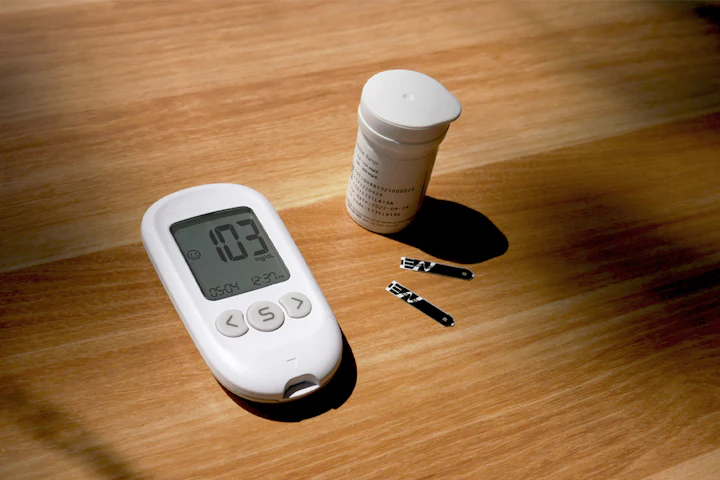
The meter is on the counter. You walk past it. You tell yourself you will check in a minute, and then it is bedtime, and then it is three days later.
The app sends a reminder and you close it without reading it. An appointment comes up and you move it, and then you move it again. When you do see a number, you feel almost nothing about it. Numbers that used to worry you or please you now sit there quietly.
If that is where you are, you are not the only one, and you are not doing this wrong. This has a name. Nurses and dietitians see it often enough that we watch for it. It is usually called diabetes burnout, and it is worth understanding rather than hiding.
Why this happens to people who are trying hard
Think about what a day with diabetes actually asks of you.
What time you eat. What is in it. Whether to check before or after. What the number means. Whether to walk. Whether you have enough supplies. What the appointment reminder said. Whether the shoes are rubbing. Whether today’s tiredness is the sugar or the week.
That is dozens of small decisions, most of them invisible to everyone around you. And it never stops. There is no Sunday off. There is no finishing. A cast comes off eventually. This does not.
Burnout is what happens when a demand is constant and there is no built in rest. It is a response to the size of the job, not a measure of the person doing it. People who have carried this for fifteen years get burnt out. So do people diagnosed last spring. It shows up in people who are careful and deeply invested, because those are the people who have been holding a lot for a long time.
What it tends to look like
Burnout does not always look like distress. Quite often it looks like distance.
- Avoiding readings, or checking and not looking at the result
- Putting off appointments, or going and saying less than you meant to
- Not wanting to open the app, or muting it
- Feeling flat about numbers that used to matter
- Being tired of talking about it, including with people who love you
None of that is a character flaw. It is not laziness and it is not a lack of caring. Often it is the opposite: it is what caring a great deal for a very long time eventually costs.
Burnout is a sign of how long you have been carrying this, not a sign of who you are.
Say it out loud to one person
The single thing that seems to shift this most is naming it to someone else.
That could be your nurse, your doctor, your dietitian, a friend, or someone at home. The words can be very plain. “I am burnt out on this.” “I have not checked in two weeks.” “I do not want to talk about food right now.”
This is hard because many people expect to be told off, or to hear a version of “try harder”. It helps to know that a care team hearing “I have stopped checking” is getting useful clinical information, not a confession. It changes what we suggest. A plan built for someone with energy is the wrong plan for someone without it, and we cannot tell the difference unless you say so.
If saying it in person feels like too much, writing it in a message counts.
Shrink the job instead of quitting it
When people are burnt out, the choice can start to feel like all or nothing: keep doing everything, or drop the whole thing. There is a middle option, and it is usually the better one.
The middle option is to make the job as small as it can safely be for a while, on purpose, with your care team.
That last part matters. Some parts of your care are safety-critical, and which parts those are depends on you, your medications and your history. Insulin, other prescribed medicines, and certain checks are not things to pause or reduce on your own. Nothing in this post is a reason to stop or skip a medication or a monitoring routine. The point is to have someone who knows your file help you decide what has to stay and what can wait, so you are resting inside a plan instead of stepping outside of one.
A conversation like that might land on checking at one time of day instead of four for the next few weeks, or leaving the food notes aside while keeping the medication exactly as prescribed, or keeping one appointment and postponing another. Smaller and agreed on beats complete and abandoned.

Drop the backlog
There is one more thing worth saying, because it stops a lot of people from starting again.
You do not have to catch up. There is no gap to fill in, no missed readings to make up for, no explaining to do about the last month. Those weeks are information, and honestly not the most important information. What your care team wants is what is happening now.
Trying to catch up is often what keeps someone away for another month, because the pile keeps growing. Let the pile go. Start from today.
Where burnout ends and something else begins
Burnout is usually tied to the diabetes itself. It tends to lift a little when the load gets lighter, and it comes and goes with what else is happening in your life.
Some things sit outside that, and they are worth a different conversation. If low mood, hopelessness, or a loss of interest in things you normally care about lasts most of the day, nearly every day, for two weeks or more, that is beyond burnout and worth telling a doctor or nurse. The same is true if you are having thoughts of harming yourself. Please tell someone soon rather than waiting for the next scheduled appointment. This is a common thing to happen alongside a long term condition, it is treatable, and it is not something you brought on yourself.
If you want to talk to someone right now, the Suicide Crisis Helpline is available across Canada in English and French. Call or text 988, any time.
Expect it to come back
Burnout is not something you get past once. It tends to arrive, ease off, and return later, often when something else in life is already heavy. That is not a relapse and it is not lost ground. It means the demand is still constant, which it is.
Knowing that in advance takes some of the sting out of it the next time.
One small step
Pick one sentence and tell one person this week. It can be your nurse, or it can be whoever is in the kitchen with you. “I am burnt out on this” is enough on its own. You do not have to have a plan ready, and you do not have to do it today.
If you are a 360Care member, you can send that sentence to your care team in the app. We will take it from there, at whatever pace works.