
Moving when your knees hurt
Most movement advice quietly assumes you are not in pain. Here is what to do when the first ten steps are the problem.
Everyone tells you to walk more. Your care team tells you. The leaflet tells you. The watch on your wrist tells you twice an hour.
Nobody mentions the first ten steps out of a chair, when the knee has set and has to be argued back into working. Or the way the hip announces itself at about the eight minute mark, every time, so that any walk long enough to count is also long enough to hurt.
So the advice slides off. Not because you are unmotivated, but because it was written for a body that does not do this.
Waiting until it stops hurting does not work
The instinct is to rest the joint until it settles, then start. It is a reasonable instinct and it usually backfires.
Joint cartilage has no blood supply of its own. It is fed by the fluid inside the joint moving around, which happens when the joint moves. A joint that is held still is a joint that is being fed badly.
Meanwhile the muscle around it gets weaker, quite quickly, and a weaker thigh means the knee absorbs more of every step itself. Weeks of rest tend to produce a joint that hurts more doing less. This is why exercise sits at the top of osteoarthritis guidance, including from Arthritis Society Canada, rather than somewhere near the bottom next to the optional extras.
That is not a claim that you should push through anything. It is a claim that the goal is not “pain free first, movement second”.

The question is not whether it hurt. It is whether it is worse tomorrow morning.
The rule that makes it manageable
Physiotherapists often work to something like this: during the activity, the pain should stay at a level you would honestly call tolerable, and by the next morning you should be back to your usual baseline.
If you wake up worse, that was too much. The fix is almost always to cut the duration rather than the effort, because time on the joint is usually what did it. Ten minutes instead of twenty, and hold there for a week or two before adding anything back.
Some soreness during and after is expected and is not damage. A joint that is angrier the following morning, every time, is the signal to change something.
Break it up
You do not owe anyone a thirty minute walk. Three ten minute walks do the same thing for your blood sugar and your blood pressure, and three tens are a completely different proposition for a knee than one thirty.
Ten minutes after a meal is a particularly good place to spend them, because that is when a short walk does the most for the rise that follows eating.
What counts when walking does not
Walking is not the only entry. These load a sore joint less and are not consolation prizes.
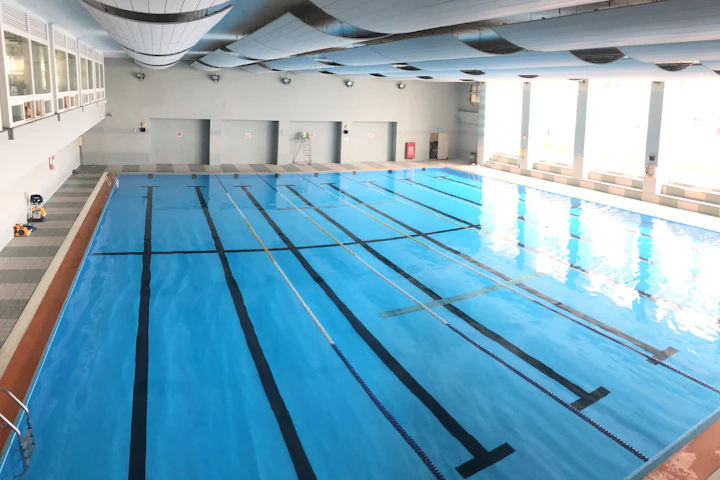
- Water. In chest-deep water your joints carry a fraction of your weight. Walking lengths of a pool, including sideways and backwards, is real work with most of the load taken off. Many community pools have warm-water or arthritis sessions.
- A bike. Stationary or recumbent. The seat carries you, and the knee moves through a smooth range with no impact at all. Set the seat high enough that the knee is not sharply bent at the bottom of the stroke.
- A chair. Standing up from a kitchen chair and sitting back down, slowly, a few times, is genuine leg strengthening. So is marching while seated.
- Strength work for the thigh and hip. This is the one people skip, and it is the one that most reliably takes pain out of a knee over a couple of months, because stronger muscle means the joint carries less.
- Poles. Walking poles shift some load off the legs and help with confidence on uneven ground.
Where you walk changes how it feels
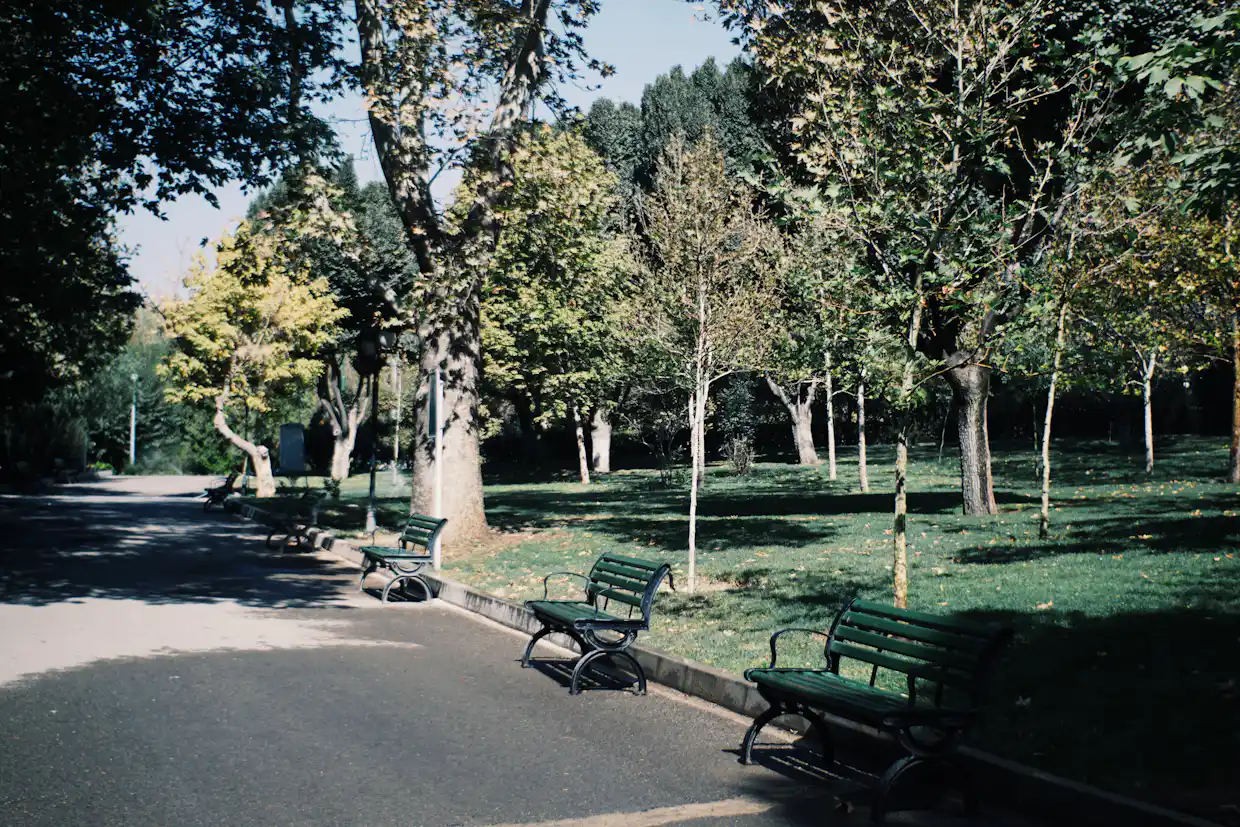
Flat and even beats scenic. A grocery store, a shopping centre before it fills up, an arena concourse, a community centre track, a school track: all flat, all sheltered, all with somewhere to sit.
Downhill loads knees harder than uphill does, which surprises people who plan a route around the climb. Look at the way back as well as the way out.
Shoes matter more than they get credit for. Cushioning that has been compressed flat over a couple of years is not doing anything, and worn-out shoes are cheap to rule out.
Worth a word with your care team
The anti-inflammatory question, before you make it a habit. Ibuprofen, naproxen and diclofenac are easy to buy and easy to take daily without deciding to. They can raise blood pressure and blunt the effect of blood pressure medication. The combination that matters most is an ACE inhibitor such as ramipril or perindopril, or an ARB such as losartan or telmisartan, together with a diuretic, plus one of these anti-inflammatories on top. That trio can put real strain on the kidneys, and the risk is higher if your kidney function is already reduced or you have heart failure. Ask your pharmacist where you sit before you take them regularly, including the ones you buy without a prescription. Rubs and gels applied to the skin get much less into the bloodstream and are often a reasonable alternative to ask about. Acetaminophen has its own daily ceiling, and it is easy to exceed by accident when it is hidden inside a cold or sleep product.
Your feet, if you have diabetes. New activity plus new shoes is how blisters happen, and if you have any numbness in your feet you will not feel one form. Look at your feet at the end of every day you have walked more than usual. A blister or a rub that is not healing needs your care team, not a bigger bandage.
Your blood sugar, if your medication can lower it. Insulin and the sulfonylureas, gliclazide, glyburide and glimepiride, can produce a low, and more activity can bring one on hours later rather than at the time. Take a few readings around the new activity and bring them in. Any change to a dose belongs to the person who prescribed it.
Stop and get help the same day for a joint that is hot, red and swollen, especially with a fever, which can mean infection. For a leg that will not take your weight after a twist or a fall, or a knee that locks or gives way. For pain, swelling and warmth in one calf, which can mean a clot.
Call 911 for chest pain or pressure, unusual breathlessness, or lightheadedness that comes on with exertion. That is not your knee, and it is not something to walk off.
One small place to start
Today, walk to the end of your street and back once. If that is too much, stand up out of a kitchen chair and sit back down five times, slowly.
Then do the same thing tomorrow and see how the morning after feels. That comparison, not the distance, is the information worth having.
If you are a 360Care member, tell your care team which joint is the problem and what you managed. They can help you find a pool session or a seated routine that fits, and refer on if the joint needs its own assessment.