
Portions, using the hands and dishes you already own
Nobody keeps weighing food. The methods that survive a year use your hand, your plate and the bowl already in your cupboard, and they are accurate enough to be useful.
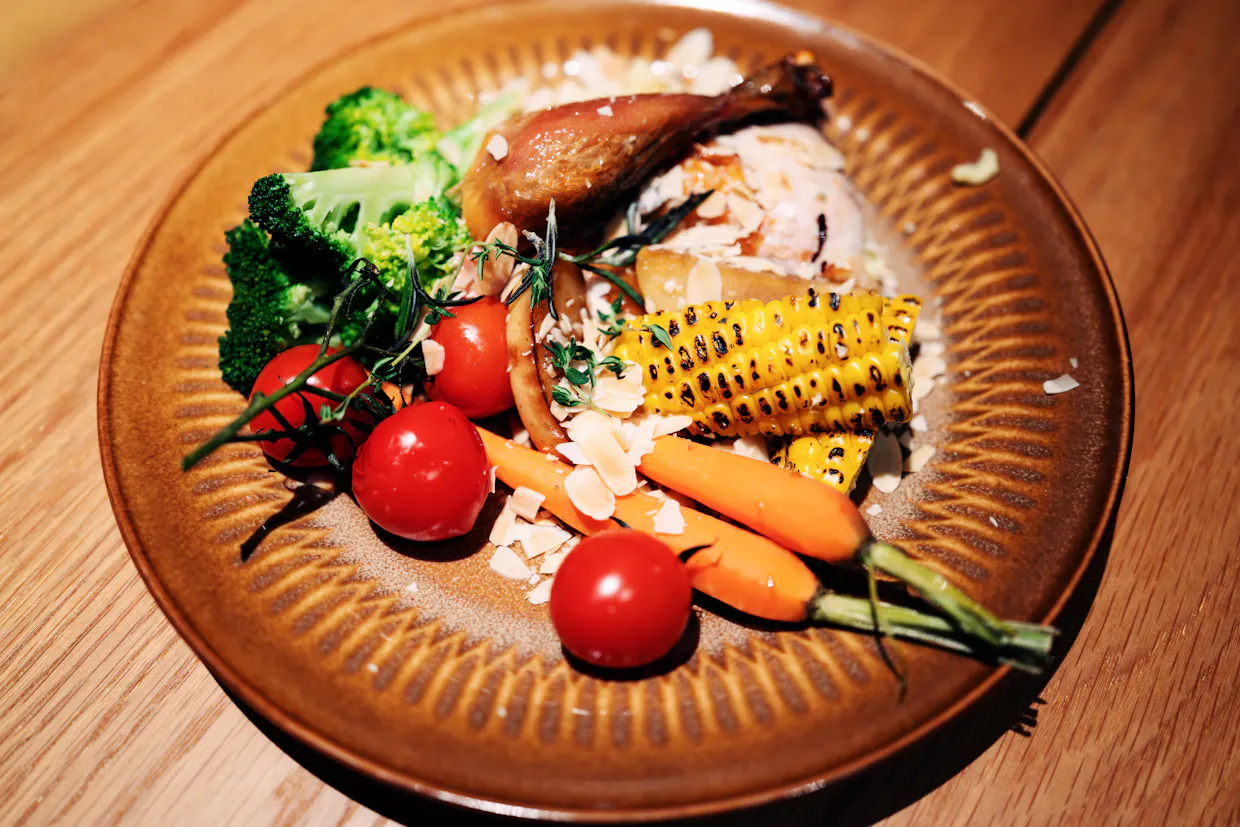
Somebody once told you to weigh your food. You bought the scale. It lived on the counter for about eleven days.
Then there was a morning where you were late, and a supper someone else cooked, and a lunch eaten standing up, and the scale moved to the back of a cupboard behind the slow cooker. It is still there.
That is not a discipline problem. Weighing food is a laboratory technique being asked to survive an ordinary Tuesday, and it mostly does not. The useful question is what to do instead, given that portion size genuinely does move your numbers.
Accurate enough beats precise and abandoned
An estimate you actually make every day tells your care team far more than an exact figure you recorded for a week and a half in March. Portion methods that use your body and your dishes are not the beginner version of weighing. They are the version still running in a year, at a friend’s table, in a work cafeteria, on a night shift.
So the target here is not correctness. It is repeatability. If your idea of a portion of rice is the same idea on Thursday as it was on Monday, a reading afterwards starts to mean something.
The hand guide, which travels with you
Your hand is roughly proportional to the rest of you, which is what makes it a reasonable measure. It is with you at every meal and it needs no drawer space.
- Protein, the meat, fish, eggs, tofu or paneer: about the size and thickness of your palm, not counting your fingers.
- Vegetables, the non-starchy ones: about a fist, and more is fine.
- Starchy foods, the rice, pasta, potato, bread, roti or couscous: about a cupped handful.
- Fats, the oil, butter, nut butter or cheese: about a thumb.
Diabetes Canada publishes a version of this hand guide, and dietitians use it because it is the one people remember without a card.
Two honest limits. It is an estimate, not a measurement, and it says nothing about how a food is cooked. And if you count carbohydrate to match an insulin dose, a cupped handful is not a substitute for carbohydrate counting. It is a sanity check alongside it.
Precision you cannot sustain is worth less than roughness you can.
The plate, which does the same job without any estimating
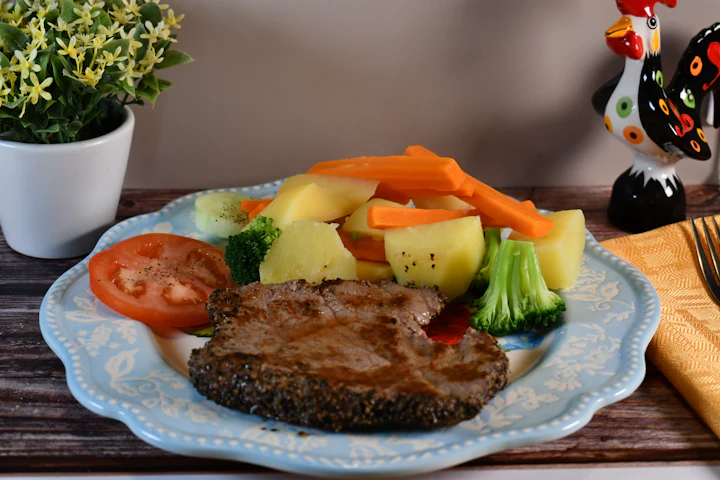
The plate method skips measuring altogether by using proportion instead of amount.
Half the plate is non-starchy vegetables. A quarter is protein. The last quarter is the starchy food. Diabetes Canada and Canada’s food guide both describe meals in roughly this shape, which is why it turns up on so many fridges.
Its real strength is that it works on food somebody else cooked. A plate of curry and rice, a stir fry, a Sunday roast, a plate at a buffet: you are not calculating anything, you are just deciding what covers what. It also quietly fixes the most common problem in a Canadian supper, which is that the starch takes half the plate and the vegetables take the space left over.
If the meal is mixed, a stew or a casserole where nothing is separable, serve the vegetables alongside rather than trying to unpick the pot.
Calibrate the dishes you already have, once
This is the highest-value twenty minutes in this article, and you do it a single time.
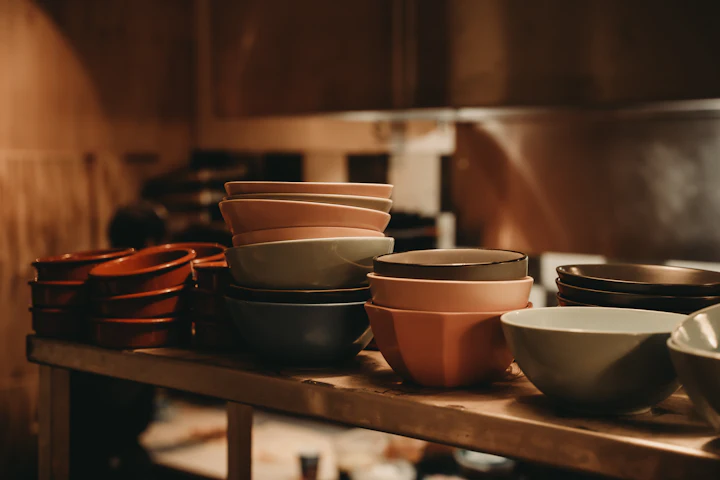
Take the bowl you actually use for cereal, the bowl you use for rice, the mug you use for juice, and the glass you use for pop. Fill each with water and pour it into a measuring cup. Write the number on a sticky note inside the cupboard door.
Most people find at least one surprise, and it is usually the bowl. A cereal bowl that holds two and a half cups is a normal bowl, and it is also well over the amount on the side of the box. Nothing about your appetite was the problem. The crockery was doing the arithmetic.
Once you know what your own dishes hold, you can stop measuring forever. The bowl is the measure. This is also where the difference between a serving on a label and a portion on your plate stops being abstract, and we have a whole article on that distinction.
The places where estimating quietly fails
A few situations defeat all of the above, and they are worth knowing rather than being caught by.
Restaurant plates, where a single serving of pasta is often two or three portions by any of these measures. Deciding what half looks like before you start eating works better than deciding when you are full.
Liquids. Juice, smoothies, specialty coffees and pop carry carbohydrate that no hand or plate method sees, because they are not on the plate.
Food eaten standing up, out of the bag, in front of the fridge, or while cooking. None of it registers, and it can add up to a meal.
The second helping, which is worth taking on the plate rather than in the pan, so that it is visible.
Worth a word with your care team
Most people can change how they estimate portions without asking anyone. Three situations are different.
If you take insulin or a sulfonylurea such as gliclazide, glyburide or glimepiride, the amount of starchy food you eat is connected to how your medication behaves. Cutting your portions substantially can bring your blood sugar low, particularly overnight. Talk to your prescriber before you make that kind of change, not after a bad night. Any adjustment to a dose belongs to the person who prescribed it.
If you match insulin to carbohydrate, tell your care team you are switching to hand or plate estimates, because your ratios were built on counted grams.
If measuring or portioning food is distressing to you, or if you have a history of an eating disorder, say so before you start. Every method in this article can tip into something unhelpful, and a dietitian can give you an approach built on regular meals and what goes on the plate rather than on quantities. That is a legitimate and well-worn path, not a lesser one.
Separately, contact your care team if you are losing weight without trying to, if you often cannot manage a full meal, or if you feel full very quickly and it is new. Those need looking at on their own terms rather than through portion sizes.
One small place to start
Tonight, fill your usual bowl with water and pour it into a measuring cup. That is the whole task. Write what you find inside the cupboard door.
Then, at one meal this week, put the vegetables on the plate first. Not instead of anything, just first, and let the rest arrange itself around them.
If you are a 360Care member, message your dietitian in the app with a photo of a plate you actually ate this week and what your bowl turned out to hold. It is a faster conversation than any food diary.